Psychedelic Santa: Uncovering The Hidden History of the Sacred Mushroom
Updated: Sep 18

"He that eateth of my flesh, and drinketh my blood,
dwelleth in me, and I in him." John 6:56
"And God said, Behold, I have given you every herb bearing seed, which is upon the face of all the earth, and every tree, in the which is the fruit of a tree yielding seed; to you it shall be for meat." Genesis 1:29
"And the children of Israel ate manna forty years.." Exodus 16:35
There exists a potent secret that has largely been hidden from mainstream society. Once widely known across the globe, it was later suppressed. This secret was only known to those at the highest levels of the Catholic Church, yet it was so powerful that some deemed it necessary to keep it hidden. Elements of this well-guarded secret have been cleverly disguised and openly displayed in mainstream culture (like in Alice in Wonderland and the Smurfs), but revealed to those with the knowledge and insight to recognize its symbolism. The secret I am referring to is the power of the sacred mushroom and its ability to help you achieve a higher state of consciousness, even reaching into realms of extrasensory perception and psychic telepathic abilities. Some might dismiss this idea, thinking it refers to characters like Professor Xavier and Jean Grey from Marvel's X-Men, but they would be mistaken. The power of the mushroom is grounded in a very real and deeply concealed history that, until recently, has been kept from the public.

Some mushrooms have been noted to provide such a level of clairvoyance that they enable mind reading. If this is indeed true, and I believe it is, one can understand why, during a deceptive age like Pisces, some might have wanted to keep these powerful secrets to themselves. It appears that only now, in the enlightened and informative Aquarian Age, is it acceptable to openly discuss a topic that once could have led to being ostracized. First, there are many varieties of mushrooms, but two seem to have been particularly revered by the ancients for their magical, godlike powers. The two mushrooms I am referring to are the famous red and white Amanita Muscaria and the Psilocybin mushroom, known as "the one that stains blue."
The Amanita Muscaria mushroom is well-known for being found in forests, typically growing at the base of pine or evergreen trees. Consequently, the red and white Amanita Muscaria is closely associated with pine trees and Christmas celebrations. This mushroom is recognized for causing a person's face to turn red, inducing laughter, and causing hallucinations. Some esoteric scholars have drawn connections between this mushroom and Santa Claus, or St. Nicholas, who famously wears the same red and white colors as the Amanita Muscaria. Santa Claus is also known for his characteristic "ho, ho, ho" laugh, which is often echoed by those who partake in the sacred mushroom's effects. Additionally, Santa's ruddy red complexion is similar to one of the effects the Amanita has on individuals.

Santa Claus's rosy complexion is the flushed face often associated with the effects of the mushroom. This specific Santa has quite a bit happening, as he's drinking a Coca-Cola, a beverage named after its early, now discontinued, ingredient: cocaine.
Santa Claus is indeed a mythological figure, but his origins trace back to the real St. Nicholas from Turkey. Some people, however, think that many of his associations are derived from the folk traditions of Russian tribespeople. Notably, St. Nicholas is the most venerated saint in Russia. Interestingly, it is within these ancient tribes of Russia and Siberia, particularly among their shamans, that the mushroom was utilized.

It should not be surprising that drugs, herbs, and plants have been used both historically and in modern times for ritualistic, religious, and spiritual purposes. It is widely acknowledged that the Inca utilized the coca plant for various purposes. In the Middle Ages, a Muslim Ismaili sect in Persia and Syria, known as the Assassins, reportedly used hashish for ritualistic purposes. It is believed that the European Knights Templars learned about the potent uses of hashish from them and introduced the practice to Europe. Some suggest that the word "assassin" originates from the word "hashish." The use of peyote among certain Native American tribes is well documented, and the use of marijuana among Rastafarians is even more widely known.
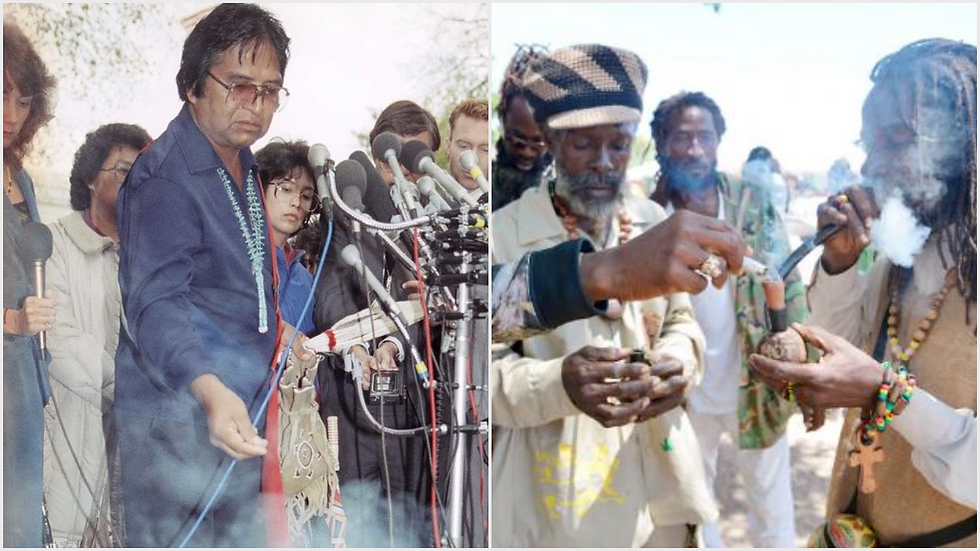
These groups closely resemble the ancient shamans of Siberia/Russia, who used mushrooms as a sacred tool for elevated purposes. Much like the traditional attire of Santa Claus, these Siberian shamans were known to wear red and white robes that mimicked the appearance of the Amanita Muscaria.

Coincidentally, Santa Claus is famous for traveling and flying through the sky with his reindeer. These reindeer are also known to wander the lands of Russia and Siberia, consuming mushrooms and "prancing" through the air in a daze.

The mushroom grows at the base of the pine tree, and coincidentally, it stimulates the gland (DMT) in the human body linked to elevated states of consciousness and awareness, known as the pineal gland. This connection between mushrooms and pine trees is why mushrooms were traditionally used to decorate old Christmas trees.

Some have observed that the garland encircling the pine tree as decoration symbolizes the kundalini snake coiling around the spine, activating higher consciousness at the brain and pineal gland level. This is represented by the illuminating star atop the Christmas tree. Beneath the Christmas tree are the gifts, symbolizing the true gift, the Amanita Muscaria mushroom, which grows under the pine tree. This raises the question of whether there is a connection between the mushroom's shape and its effect on brain atoms (DMT), and the atomic bomb's manipulation of atoms, resulting in a mushroom cloud. It's known that the human body often mirrors natural patterns; for instance, the Fibonacci spiral appears in the Milky Way, ram horns, sea shells, and even in human hair and ears. It wouldn't surprise me if the pine cone's shape, the mushroom, and the pine cone-shaped pineal gland were more than coincidental. This same reasoning applies to the mushroom's manipulation of atoms and the atomic explosion's mushroom cloud. Mushrooms release a burst of dimethyltryptamine (DMT), enhancing our awareness, which is why some refer to it as the "spirit molecule."

Famous Vatican pine cone. The pine cone like the pine tree are connected to the Amanita mushroom that grew underneath it and had a great affect on the brain and pineal gland when eaten. It is also interesting that the pineal gland itself is shaped like a pine cone, some say that the human body has a way of imitating the universe and nature.
The Catholic Church appeared to be quite aware of the power of the sacred mushroom and its connection to the pineal gland, as evidenced by many of its high-ranking members, including the Pope, dressing in a manner reminiscent of the Amanita Muscaria mushroom. The Bible is filled with subtle references to the use of mushrooms. For example, the prophet Moses repeatedly instructs the Hebrews to consume the manna (Exodus 16) that grows on the ground, with "manna" being a term for mushroom. Mushrooms are also referred to as flesh due to their appearance and texture. The Bible is often accused of promoting cannibalism, but this interpretation arises from a misunderstanding. When Jesus says (John 6:54) to eat of his flesh and drink of his blood, it could be an allusion to the sacred mushroom as a sacrament.


The church probably discovered the mushrooms' magical properties from the people whom their conquistadors had subjugated. The Olmec, Aztec, and Mayan civilizations were also familiar with the mushrooms' powers, as evidenced by carvings of the sacred plant in their artwork.

This knowledge might not have been acquired solely through conquests, as it is widely recognized that numerous Christian traditions are founded on the ancient civilizations of Egypt, Mithra, and India. The followers of Mithra, residing in both Syria and Persia, are well-known for their religious use of mushrooms.
The well-known children's cartoon, the Smurfs, is loosely inspired by the religious practices of Mithraism. Adherents of Mithraism consumed mushrooms, experienced hallucinations in soothing water baths, and wore hoods that later became known as the Phrygian cap.

The Smurfs wear hoods and, as you might have expected, reside in mushroom houses. Papa Smurf is actually a wizard or shaman who has mastered the mushroom. The Smurfs' blue color perfectly leads me to discuss another mushroom, the Psilocybin mushroom, which is well-known for turning blue when pinched.

In ancient India, the Psilocybin mushroom is recognized as a fungus that grows from cow dung. The well-known expression "holy crap" or "holy sh*t" takes on a completely different significance. Many Indian deities, such as Krishna, are depicted in blue, a color choice likely linked to the Psilocybin mushroom. Some believe the use of this sacred mushroom extends beyond India to the Himalayan region of Tibet, influencing the religious text known as The Tibetan Book of the Dead. This subject has impacted the writings of radical thinkers like Timothy Leary and even inspired some songs by the Rock n Roll band The Beatles.

Ancient India is not the only place that utilized the sacred mushrooms. The ancient Egyptians were very much aware of the power of the mushroom, as they decorated the tops of their pillars that held up the temple roofs to look like mushrooms.

While not all columns were designed to resemble mushrooms—some took the form of other plants like the lotus and papyrus—there is no denying that certain columns do resemble mushrooms. The renowned red phoenix bird, celebrated in places like Heliopolis, was believed to resemble a mushroom. The Amanita Muscaria is known to crumble in a manner that some say resembles the wings and color of the red phoenix bird. Many of these mushrooms, upon dying, release seeds in the exact same location, allowing them to regrow in the same spot. Coincidentally, the Egyptian phoenix is said to die or burn out, only to return to the same place in a cycle of 500 years.
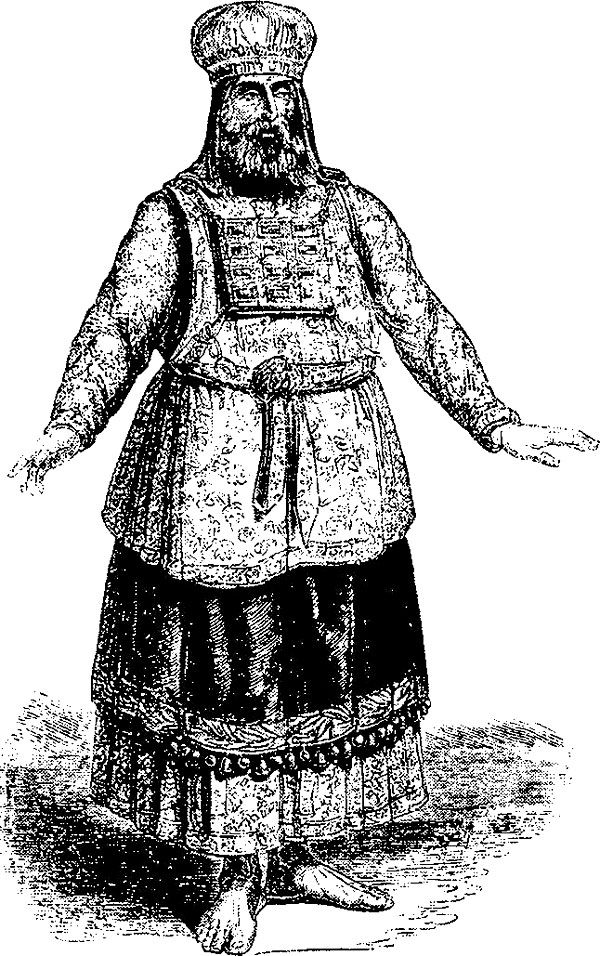
Depiction of Jewish priest with mushroom headdress.
This is not intended as a critique of Christianity. As I often mention, the more you study religion, the more you realize that they overlap and are interconnected in various ways. The use of mushrooms and other sacred substances (plants) was a widespread ancient practice. Even in Judaism, the priestly garments bore a resemblance to mushrooms, particularly the headdress, which looked much like a mushroom cap. Mushrooms were considered so potent that it was believed their power remained in urine after consumption. Ancient people would drink the urine to harness the mushroom's effects. This is why many fountains worldwide are shaped like mushrooms, featuring statues of naked children urinating into them to recycle the mushroom's power. While this may sound extreme or unbelievable, if it could be shown that such substances allowed one to read minds or foresee events, this would be akin to possessing divine powers. The expression "getting high" might actually be a mistranslation of reaching the "most high," symbolizing the ascent to heaven or breaking through the seven chakras with the help of the mushroom's gifts.

It is believed that numerous fountains worldwide are designed to mimic the appearance of mushrooms. The Amanita Muscaria is recognized for curving upward into a cup or grail shape in its final stage. In this cup form, the mushroom can collect dew and rainwater, imbuing the water with a red, blood-like tint and granting it magical properties if ingested.
As drug laws begin to evolve during the Age of Aquarius, an era characterized by increased knowledge and heightened awareness, what was once concealed, banned, or deemed illegal will gradually become more accepted. This shift in drug laws is already evident in the United States with the case of marijuana. Alternative health communities are increasingly discussing these topics more openly, and I am confident that this subject will gain mainstream attention in the future. In the meantime, I advise reading this article with a sensible approach. Mushrooms, while celebrated for their benefits, are also feared for their potential toxicity. Furthermore, in most countries, the use of mushrooms remains illegal, so this is not intended to encourage breaking the law, but rather to hope for legal changes. The purpose of this article is to shed light on an unusual, intriguing, and enlightening topic that will hopefully become less obscure as science explores the potential of this powerful fungus.

Certain esoteric authors have noted resemblances between the form of the tau cross and Christ with outstretched arms and a covering at the mid-section. This closely mirrors the shape of the Amanita mushroom and its skirt.

This is the Amanita Muscaria at a stage where it is turned upward like a cup. As previously mentioned, it is known to collect dew and rainwater, now tinted red by the mushroom. This was consumed by shamans or the priest class. Some authors have suggested that the true esoteric meaning behind Christ's words "eateth my flesh, and drinketh my blood" is that the mushroom is the real holy grail, rather than a mythical golden chalice. The blood refers to the rainwater, now chemically stained red.

Jesus depicted as the Lord of the magical plants from the Canterbury Psalter made in Canterbury England. The plants viewed as magical are the red Amanita Muscaria the blue Psilocybin the Syrian Rue followed by an Opium plant. The color green is most likely symbolic of Cannabis.
One cannot discuss mushrooms without mentioning archaeologist and religious scholar John M. Allegro. Allegro gained fame as one of the scholars who translated the Dead Sea Scrolls. However, many might not know that he authored a controversial book on mushrooms and their religious significance, titled The Sacred Mushroom and the Cross: Fertility Cults and the Origins of Judaism and Christianity. Allegro's insights into the connection between mushrooms and Christianity and Judaism significantly hindered his rise as a highly respected religious scholar. Like many forward-thinking scholars, Allegro was ahead of his time, and his career suffered as a result. I believe that if Allegro were writing in today's Age of Aquarius, his work would be less criticized and more widely accepted and appreciated.

As we enter the dawn of a new knowledge-based and enlightened Age of Aquarius, information that was once restricted is now open for discussion and even encouraged. Popular authors like Michael Pollan, known for Defense of Food, are bringing mushrooms and psychedelics back into mainstream conversation. During the Age of Pisces, discussing these topics could have jeopardized careers, but this is no longer true. Although these plants remain illegal in many places, any testing should be conducted by experts in a safe, controlled environment. I believe that in the near future, as the spirit of the age evolves, laws will become more enlightened and relaxed. Psychedelics may be used to treat conditions like depression and anxiety while aiding humanity in achieving higher states of consciousness. For your enjoyment, I found some old footage from a 1961 episode of the television show One Step Beyond. Despite the grainy quality, the subject matter is intriguing as host John Newland explores the mystical powers of the sacred mushroom. There is much more to be said on this topic, so feel free to delve into the booklist below to satisfy your curiosity.
Further Reading:
James Arthur. Mushrooms and Mankind: The Impact of Mushrooms on Human Consciousness and Religion. The Book Tree. 2000
John Allegro. The Sacred Mushroom and the Cross: Fertility Cults and the Origins of Judaism and Christianity. Hodder and Stoughton, New York. 1970
Michael Pollan. How to Change Your Mind: What the new Science of Psychedelics Teaches us About Consciousness, Dying, Addiction, Depression, and Transcendence. Penguin Press. 2018
Comments