African Dreams: Alpha Phi Alpha, the Mysterious sphinx, and the coming rise of the Aithiopians
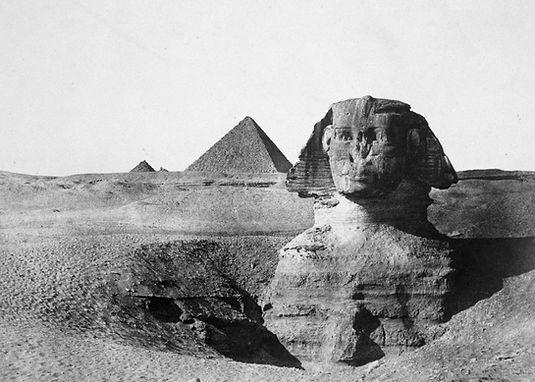
I am a member of Alpha Phi Alpha, the oldest African-American/Black fraternity in the United States. I joined in the 90s, during the height of Afrocentrism, as an eager freshman in college. I attended Lincoln University, known as the oldest historically Black college or university in the United States. My choice to join Alpha Phi Alpha was influenced by the Afrocentric symbolism the fraternity embraced long before Afrocentrism became a concept. This is ironic because one of the criticisms you may here coming from Black Nationalism is that the Black Greek letter organizations are outside of their culture. In fact the great Black historian John Henrick Clarke would even say this in his lectures. I can't speak for all the Black Greek letter organizations, but Alpha Phi Alpha has always been centered in African consciousness and this is what attracted me to it as a young wide-eyed freshmen.

The fraternity's primary symbols include the Sphinx and the Pyramids of Giza, which are part of their Coat of Arms and Shield. In the 90s, I was deeply involved with the ideas and philosophies of African and African-American scholars like Dr. Cheikh Anta Diop, Dr. John Henrik Clarke, Dr. Yosef Ben Jochannan, Dr. Chancellor Williams, Dr. Ivan Van Sertima, Dr. Molefi Asante, Dr. George James, and Ashra Kwesi and Anthony Browder.


These scholars were committed to the belief that Ancient Egypt was an African civilization, not a European or Arab creation, and advocated for its inclusion in African or Black History discussions. As a young 19 or 20-year-old, I linked these scholars' insights with my interest in Alpha Phi Alpha's symbolism. This connection reflects the powerful symbolism that the founders of Alpha Phi Alpha aimed to convey.

During my college years, I paid close attention to the imagery displayed by various fraternities. The Omegas featured a dog in their imagery, but it was the Alphas that captured my interest with their Afrocentric symbols, including a sphinx and Egyptian motifs. The actual connections between Alpha Phi Alpha and Africa are even more precise but I was advised not to expose any of the secrets of the fraternity. Through my many readings I have learned that Egypt is indeed an African Civilization not some foreign civilization created by outsiders, but a homegrown civilization created by indigenous Africans. Some scholars propose that Nubia and regions like Nabta Playa were forerunners to Ancient Egypt. Notably, alternative thinker Robert Bauval explored this topic in his book titled Black Genesis. Afrocentric historian Chancellor Williams also supported this view in his book The Destruction of Black Civilization, which includes a chapter called Ethiopia's Oldest Daughter: Egypt.

This leads me to Alpha Phi Alpha and the Sphinx symbol, highlighting its importance not only to Alphas but also to black or African individuals in general. For many, the Great Sphinx is a mystery and a representation of hidden knowledge. Located in Egypt, Africa, its precise age remains unknown. Some believe it predates the pyramids and dates back to the fall of Atlantis, with its alleged survivors settling in Egypt. Conservative estimates place its construction around 2600 B.C., making it roughly 4,000 years old, coinciding with the reign of Pharaoh Khafre/Chephren. However, some scholars argue there is little evidence that Khafre/Chephren built the Sphinx. In fact, some forensic psychologists, like Frank Domingo, a former New York City detective, claim that Khafre's facial features do not match the Sphinx, as the profile resembles an African with prognathism, a slight forward projection of the jaw familiar to dentists.
Some scholars propose that the Sphinx's age should be reconsidered to a period when Egypt experienced heavy rainfall. Scholars like Robert Schoch and alternative thinkers such as John Anthony West and R.A. Schwaller de Lubicz argue that the Sphinx exhibits water erosion rather than wind erosion. The last time Egypt experienced such heavy rainfall was around 5000 B.C., but Schoch suggests the date could be pushed back even further to around 10,000 B.C.
This implies that the Great Sphinx is extremely ancient, possibly dating back to 12,000 years ago. Although this seems like a very distant past, it aligns with celestial events of that era, as noted by visionary thinker Robert Bauval. Through astronomical calculations, Bauval discovered that the Sphinx aligns with the constellation of Leo in the sky around 10,500 B.C. This is also when the three pyramids of Giza align with Orion's Belt, with the three stars forming the belt line and the third star slightly offset, similar to the third pyramid on the ground.

Before Orion became associated with the Greek god, the constellation was linked to the Egyptian god of resurrection and the dead, Osiris, or Asar in African terms. Asar also inspired the name of the biblical figure Lazarus, known for resurrection; however, Asar/Osiris came first. Bauval proposes that by associating the Great Sphinx with Leo, it situates the Sphinx in a historical era called the Age of Leo or Zep Tepi, "The First Time." Bauval views the Sphinx as a "cosmic clock" indicating the first Age of the precession of the equinox. Precession is a 24,000-year cycle that the Earth undergoes as it rotates backward on its axis, passing through the 12 zodiac signs, each lasting about 2,000 years for a constellation. With 12 constellations, this cycle takes 24,000 years to complete. According to the Egyptians, "The First Time" was an era so ancient that it was when the gods themselves ruled over Egypt/Kemet. Around 10,500 B.C., approximately 12,000 years ago, is near the date given by the Greek poet Plato for the fall of Atlantis. Atlantis was an ancient Egyptian story recorded by the Greeks about a utopian civilization predating Egypt, Greece, and Rome, believed to have existed in the Atlantic Ocean. This civilization was highly advanced, more so than Egypt, Greece, and Rome, but it eventually sank and was destroyed by a natural disaster or possibly by the gods due to the people's arrogance, similar to the biblical story of the Tower of Babel. It is said that the survivors settled in surrounding regions, populating Egypt, Mesopotamia, and even reaching as far as early American civilizations.
This brings me to my concluding point: the forthcoming revival of the Aethiopians. To grasp this concept, one must return again to the precession of the equinoxes and the various cycles experienced by our planet. Firstly, we observe the moon's cycle around the Earth. Secondly, we acknowledge the Earth's cycle around the sun, defining our year. The Earth spinning on its Axis is a third rotation. Some alternative scholars, such as Walter Cruttenden believe there is a fourth cycle, suggesting that our solar system is binary, a notion he derived from studying the Yogis of India. Cruttenden wasn't alone in this belief; Afrocentric scholar John G. Jackson also theorized that we are in a binary star system with Sirius, with Sirius and our sun orbiting each other in another cycle taking about 24,000 to 25,920 years to complete. To quote John G. Jackson quoting George R. Goodman's article The Age of Unreason in the Freethinker when it says:
Our entire solar system with all the planets and moon describes a huge circle around another sun in
space, the star Sirius. This movement takes 25,920 years to complete and, during the time, our Sun appears to traverse through various constellations or star clusters. This was already known to the ancient from China to Mexico and Babylon to Egypt.
The 24,000-year cycle progresses in reverse through the 12 zodiac signs, starting with the Sphinx and the Age of Leo, when these constellations appear at dawn during the spring equinox. Each zodiac sign represents an Age lasting roughly 2,000 years. As previously mentioned, these 12 signs, each lasting about 2,000 years, collectively make up a full 24,000-year cycle. We have just concluded the 2,000-year Age of Pisces, also known as the Christian Era, and have entered the New Age of Aquarius, which will last for another 2,000 years. Pisces was a descending age, whereas Aquarius is an ascending Age, as Sirius and our sun draw nearer to each other. The gravitational influence of the larger Sirius on Earth and the Sun is the real reason for the Earth's axial wobble. As the two suns orbit one another, we experience ascending and descending phases, or the rise and fall of civilizations. Civilizations flourish when the two suns are closer and decline when they are farther apart. According to these scholars, we are currently at the midpoint, with the two suns approaching each other again. Sirius was not only important to the Ancient Egyptians but also to the West African tribe known as the Dogon; furthermore, the star Sirius remains a significant star, referred to as the Blazing Star and the Eastern Star in Freemasonry. The importance of Sirius in all these traditions might be because Sirius is actually a dual star with our own sun.
The African diaspora is only a few centuries removed from slavery, while those who remained in Africa have been free from colonial rule for about 50 years or are still experiencing neocolonialism. Globally, many African people live below the poverty line, a reality that becomes more apparent with increased travel. I believe these are patterns within the cycles humanity experiences as it transitions from descending ages of darkness to ascending ages of enlightenment. As we move through these ages, the African/Black race will once again take a leading role in civilization. As the Bible states, "the first shall be last and the last shall be first." I, like others, believe that history is circular rather than linear as taught in schools, and that we may have been more advanced the further back in time we go. The future for Africa appears promising. While Europe faces a declining population, Africa's population is expected to surge. By 2050, one in every four people will be African/Black, accounting for a quarter of the world's population, surpassing China and India. By 2100, the gap between Africa and the rest of the world will widen even more. Ethiopians will once again see themselves at the dawn of civilization, much like in Ancient Egypt and Nubia during a time when the Great Sphinx aligns with the Age of Leo like a clock, known as Zep Tepi or the "First Time," when gods/Ethiopians ruled the Earth.
I would like to end this post with a clip from a lecture/tour by Ashra Kwesi, one of the last prominent Afrocentric scholars remaining, as many are passing away due to old age. Kwesi was a student of the late Dr. Ben Jochannan, and he fills in the gaps left by some of the founders of Alpha Phi Alpha, who were limited by the era they lived in. Kwesi reminds us that the name "Sphinx" is actually Greek, and the true name of the Great Sphinx was Horemakhet, meaning Heru or Horus on the Horizon. This name likely refers to the Sphinx's alignment with the sun during the vernal or spring equinox, as the first pharaohs of Egypt were known as Horus kings. As Anthony Browder has noted, the human head on the lion body probably symbolizes the higher consciousness of humans being able to control their lower animal instincts. This concept is similar to the seven chakras in Hinduism, where the lower chakras are associated with sex and food, and the higher chakras are linked to enlightenment and a connection with the divine.
Comments